Sewchet

Sewing, crochet, crafts, accessories, baking, tutorials,


18 Comments

Tutorial: How To Cover A Lampshade and use Chalk Paint to upcycle table lamps

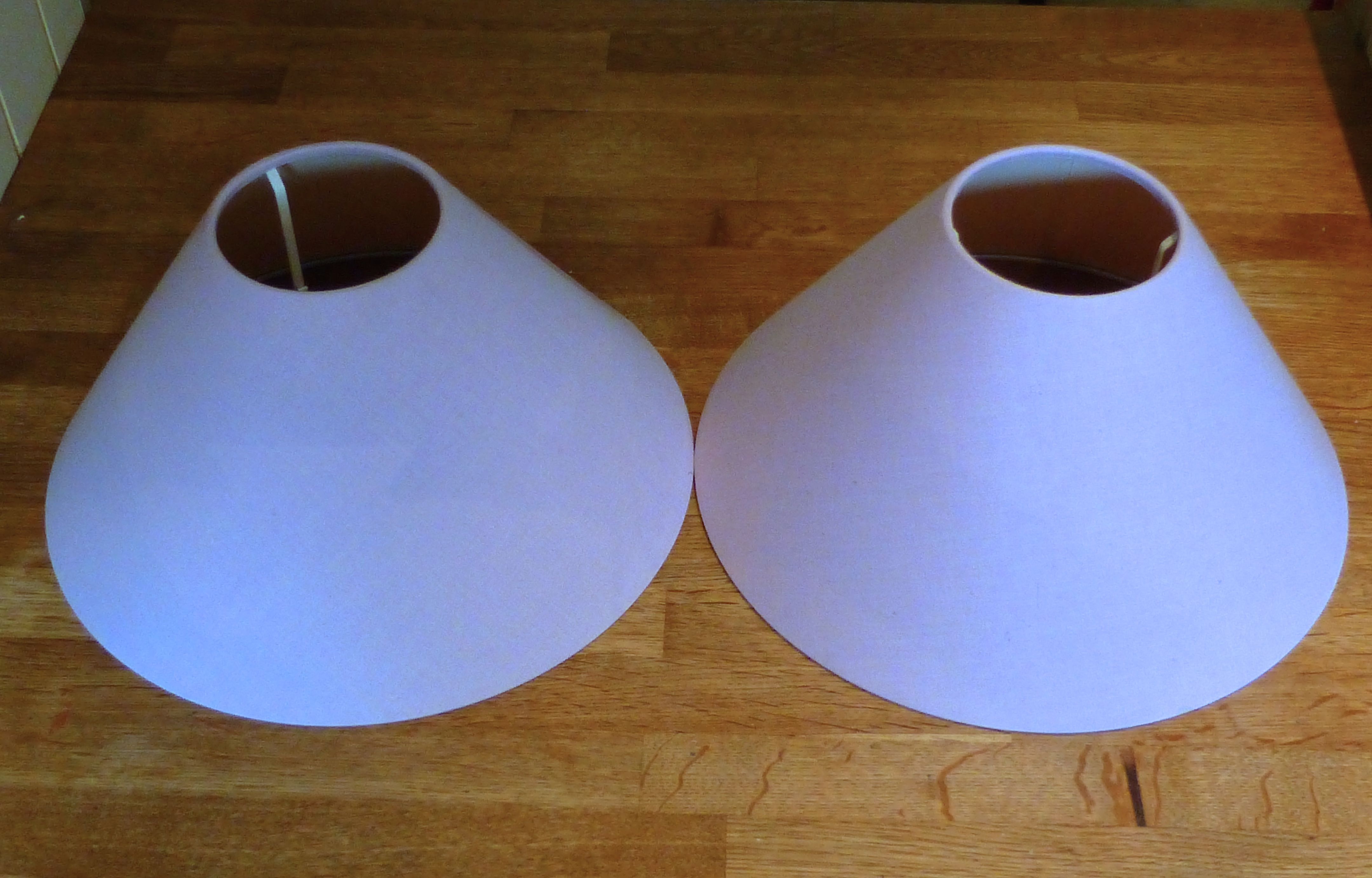
You may remember a post from earlier this week when I mentioned that I had been bargain hunting in charity shops for Number One Son’s return to Uni. Part of our haul included two utterly minging shiny brass-effect table lamps complete with two equally vile lilac lampshades.

I snapped them up solely because they were in perfect working order and only cost a meagre £3.00 in total. No.1 would never have bought them but, as I was paying, he was grateful for anything and I convinced him that we could do something, anything, with them to increase their aesthetic appeal.

Quite frankly setting a match to them would make them more attractive so my plan to paint the bases and cover the shades was over and above, I think!

My lovely friend Roz over at The Velvet Cow has been extolling the virtues of Annie Sloan’s Chalk Paint for a while now and very kindly lent me a pot of Old White and a paintbrush for the afternoon. (Be sure to check her blog out to see the wonderful things she has done with it!)

We started painting before I remembered to take photos, but you get an idea of what we were up against: –

P1030526

P1030529

The great thing about Chalk Paints (we used Annie Sloan but Autentico also has an extensive range of colours) is that they eliminate the need for laborious preparation. No sanding necessary, just wipe clean and paint – it truly is that simple!

So we did…

P1030527

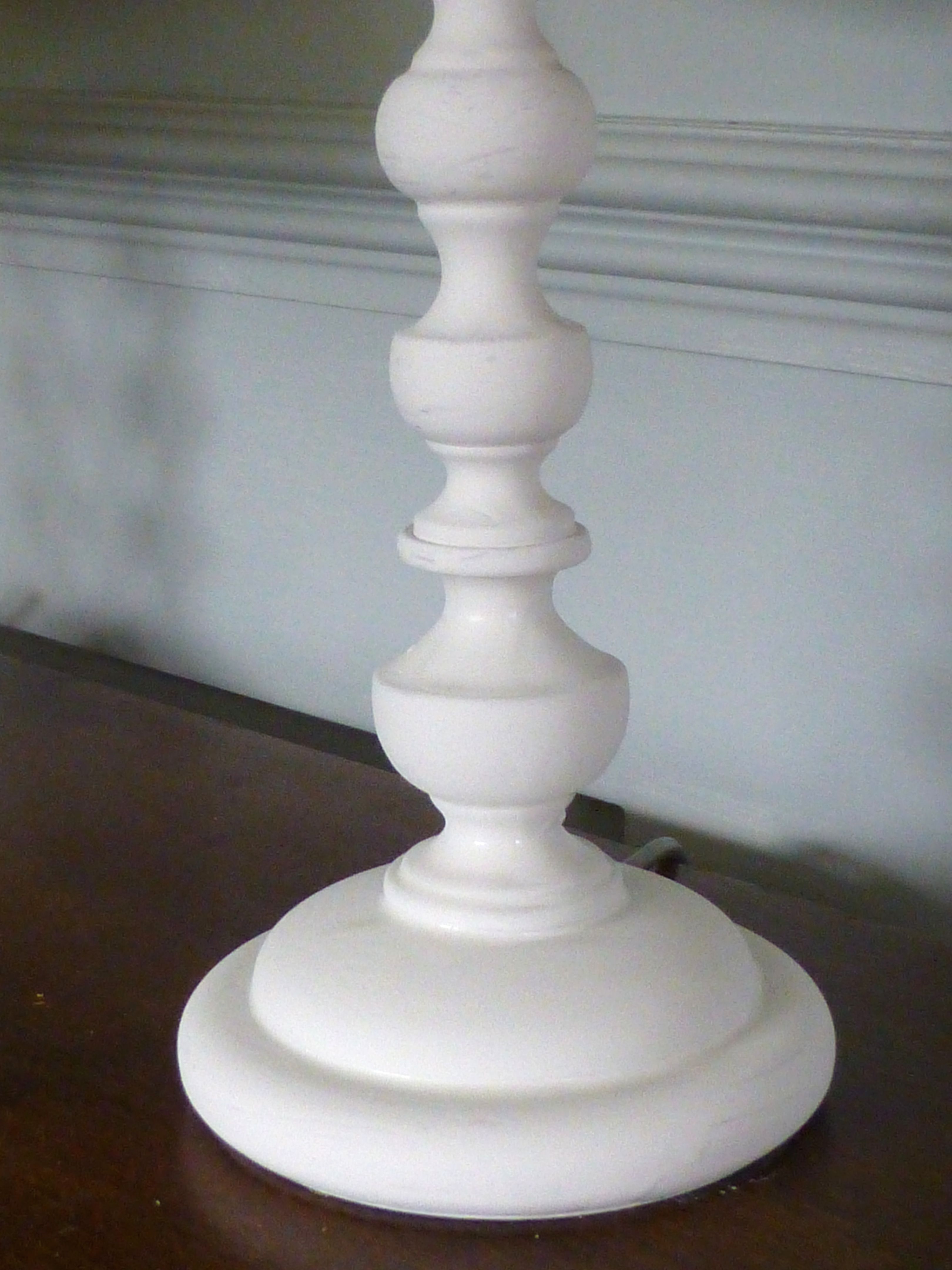
One coat was all they needed before being left to dry. A coat of wax should then really be applied as a protective layer but, as these were table lamps, not table legs, we figured they weren’t going to get bashed about that much to warrant it. And we didn’t have any anyway:)
P1030542

Much better.

Now to start on the lampshades.

Having mixed some PVA glue with an equal amount of water, it was slopped on the the shades very quickly.

P1030531

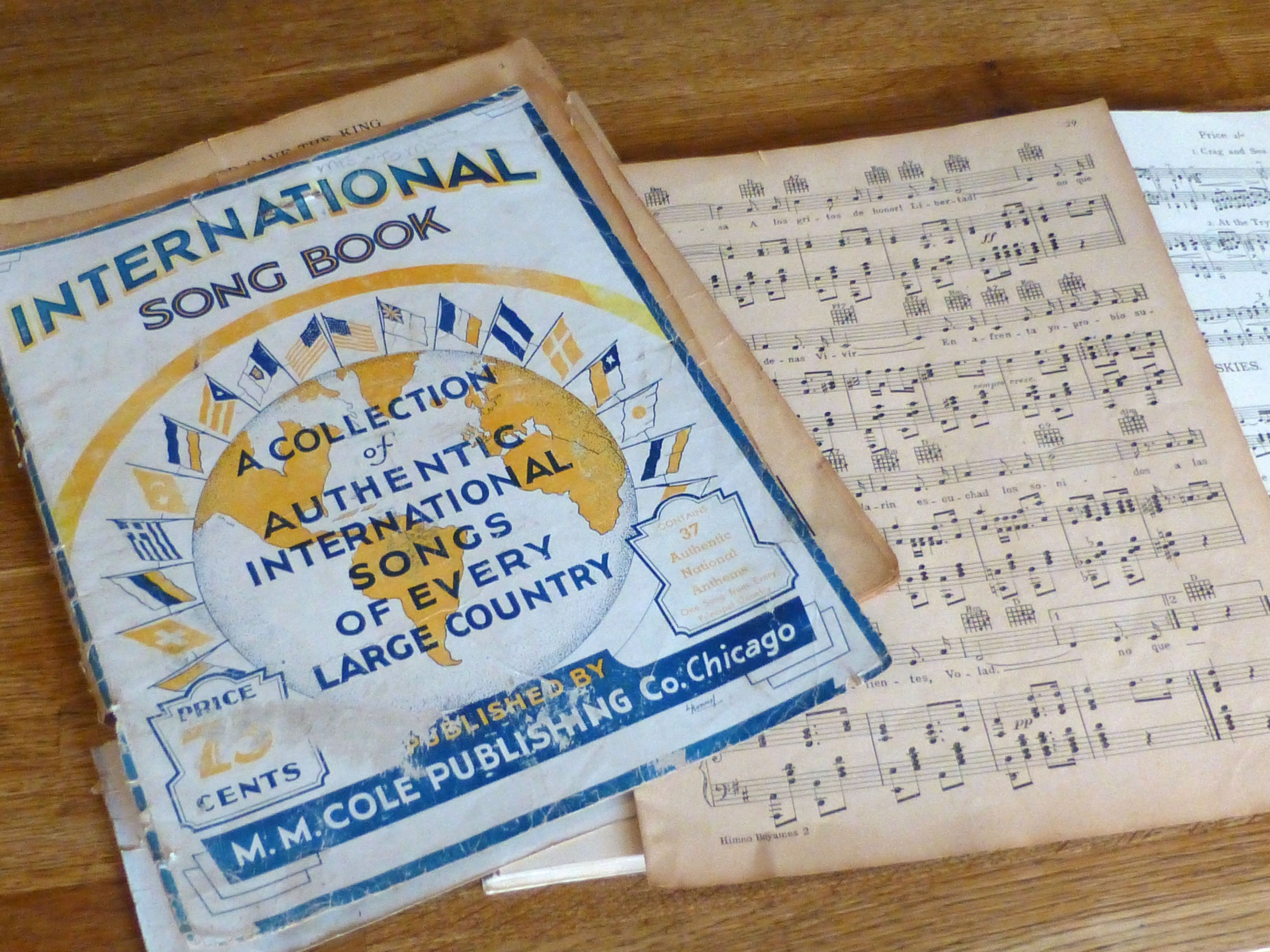
Another charity shop find that I couldn’t resist ages ago was this book of musical scores, each one the National Anthem of a different country. It’s so old that the pages are the authentic tobacco-stained brown that is so often faked with cold tea; a lovely contrast to the white base.
P1030528

We literally tore pages from the book and pasted them with more PVA onto the shades, smoothing it as we went.

P1030532

Extra pages are slapped on, overlapping where necessary, until the whole shade is covered.

P1030533

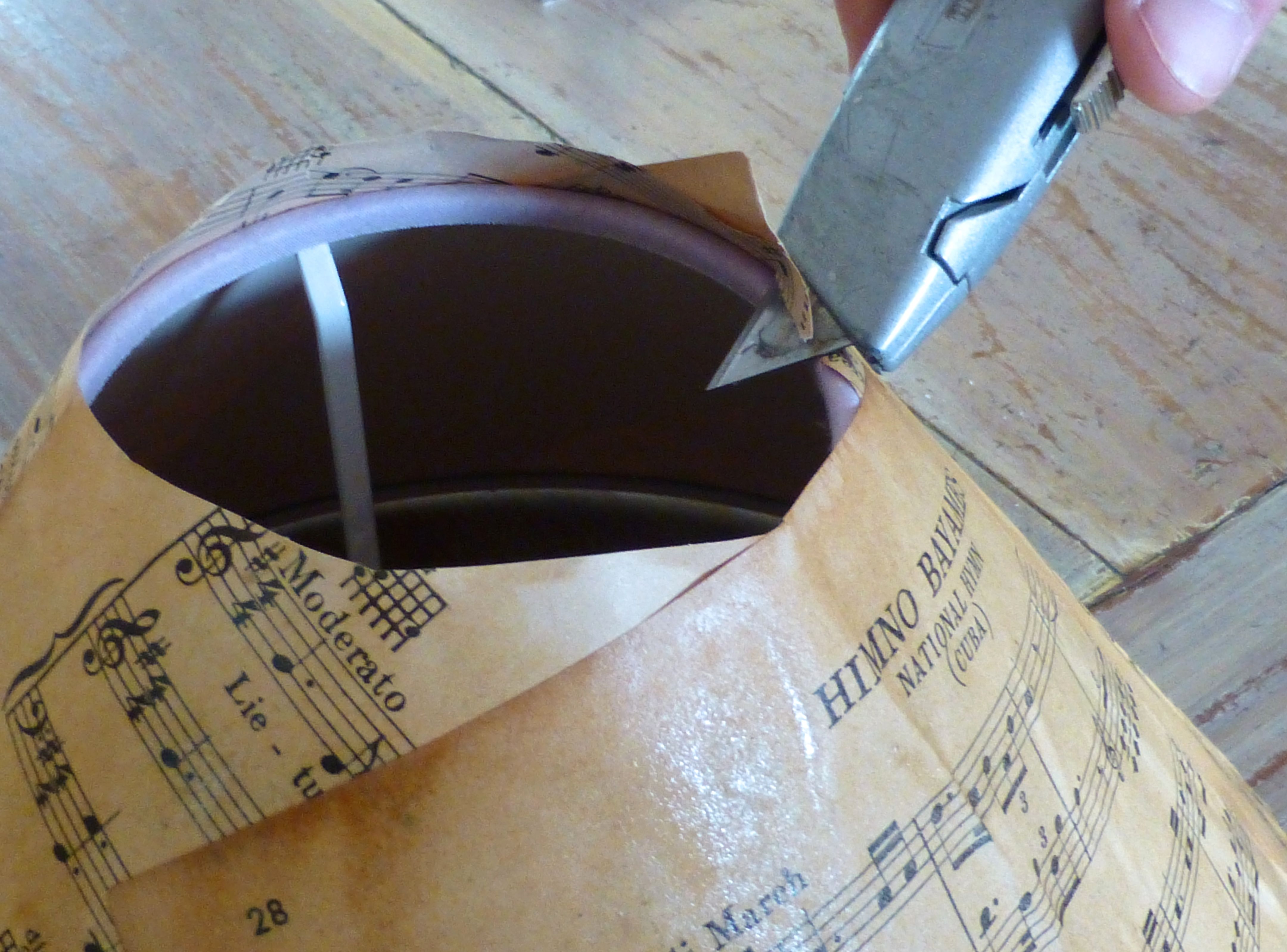
When dry, use a Stanley knife or (similar craft knife) to cut away the overhanging edges. (Tip: make sure you use a fresh blade or you risk ripping the paper).
P1030537

P1030540

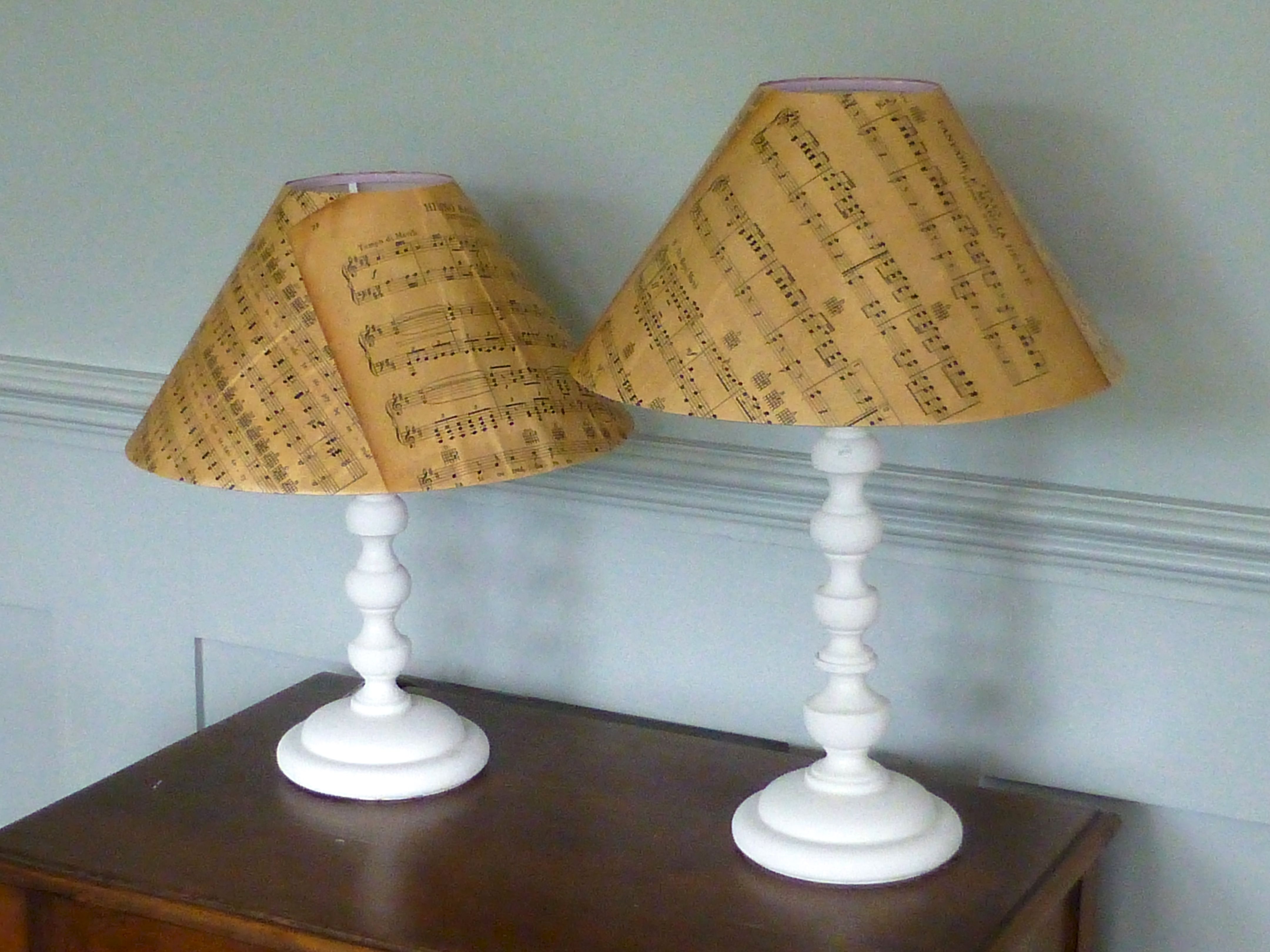
I can’t wait to show you the result so, without further ado…..

….TADAH!
P1030539

No.1 is understandably chuffed with our efforts and I think they will add a cosy touch to his Uni digs. They look especially lovely at night time.
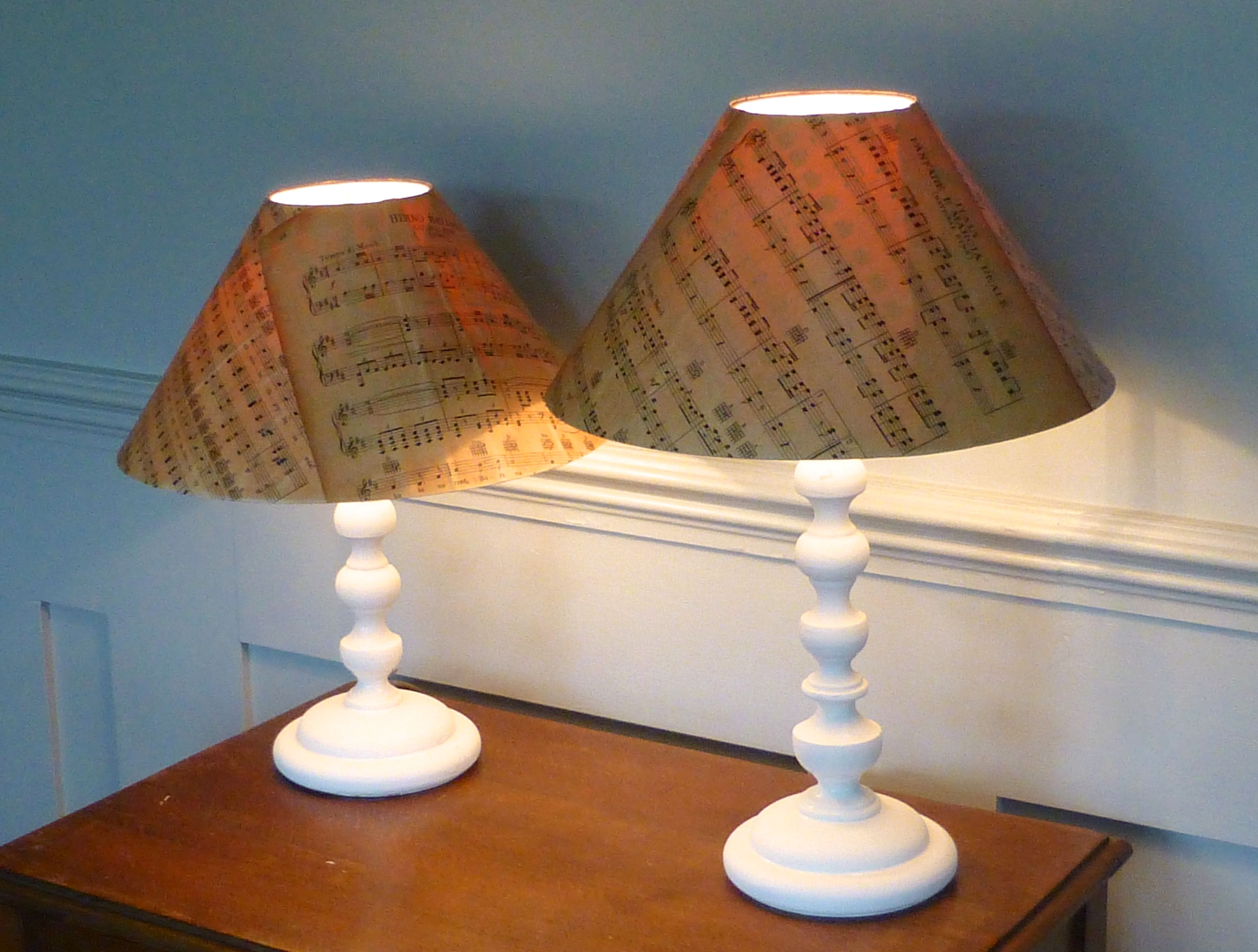
P1030541

It’s amazing what you can do with very little cash and lots of imagination, isn’t it?


61 Comments

Greengate Style Baby & Toddler Girls Crochet Poncho

Hello Fellow Crocheters – this one is for you!

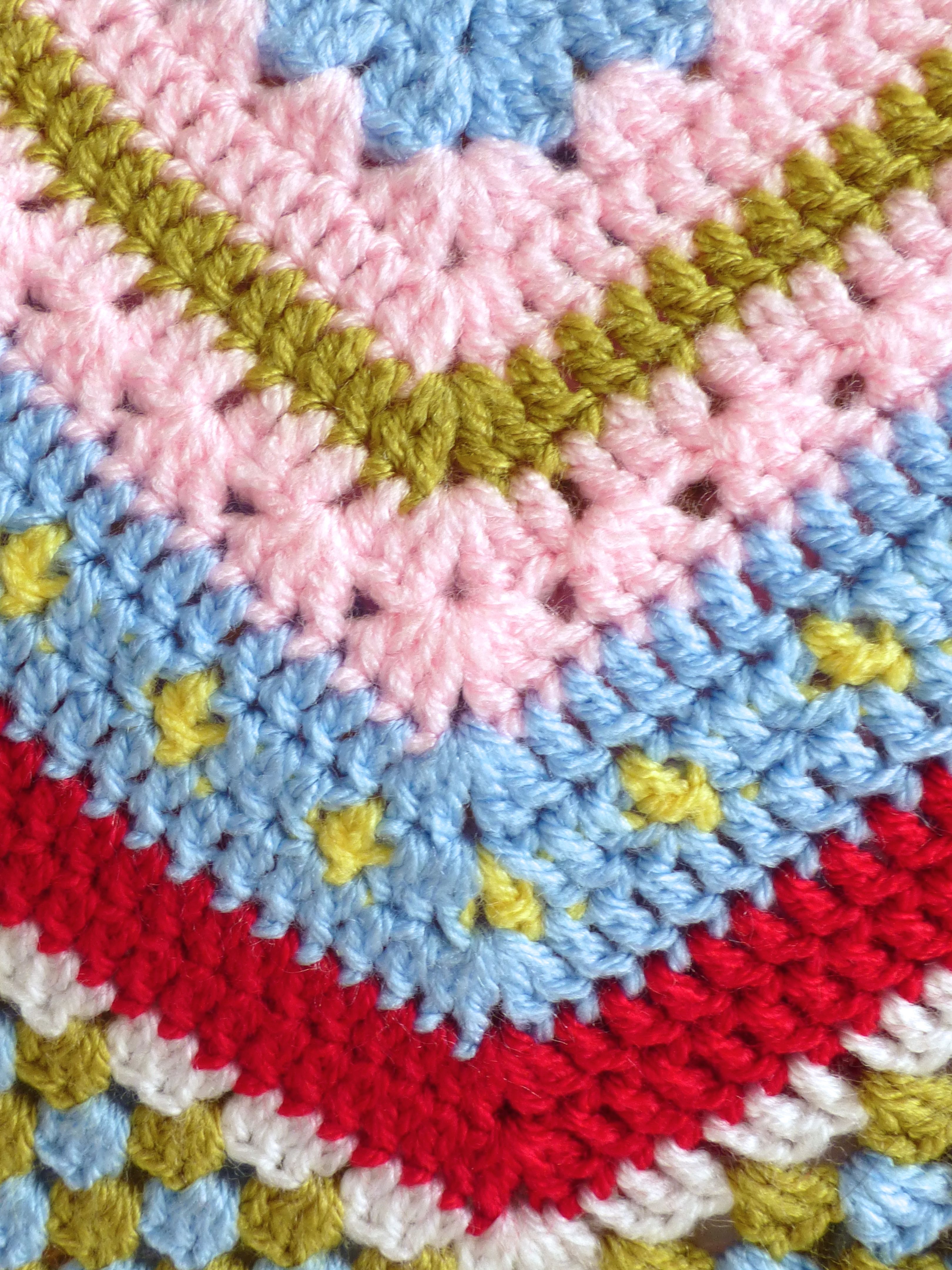
I’ve just finished a crocheted poncho/cape for a little girl’s Christmas present and I thought I’d share it with you. It’s entirely my own original design and, as I attempted to make notes as I went, it took a little longer than it should have. I reckon you could whip one up in just a couple of evenings which is great news for those of us who get bored easily.

Greengate Girls Crochet Poncho

Based on the lovely Greengate colours, I have a huge WIP that is of the same ilk;

IMG_0898

It’s quite simple really, just double and treble crochet with a picot edging, but the colours are so cheerful and bright.Greengate Girls Poncho4

Greengate Girls Poncho3

Greengate Girls Poncho2

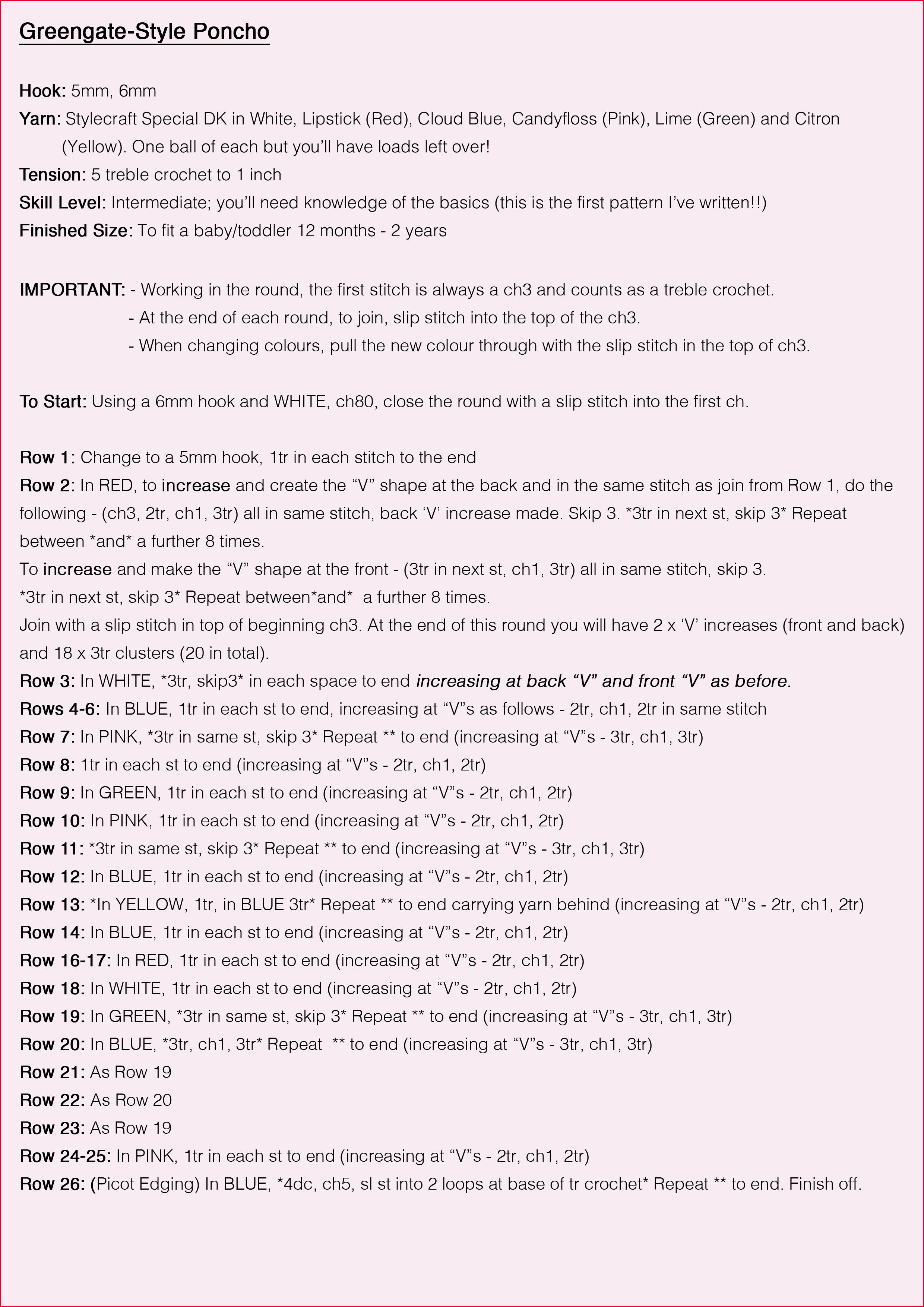
This is my first attempt at writing a pattern so I hope you can work it out. The more experienced amongst you will probably be able to figure it out without referring to my instructions, but it is possibly more than a complete beginner could handle.

Anyhoo, here goes….!

Corrected pattern


This is a free pattern that you are welcome to share – but please do not copy and paste to any other site; just link back to this page. (Please also respect my efforts and do not make this design to sell elsewhere).

I’d love to see any that you’ve made yourself, so pop a link in the “comments” box if you do:)


6 Comments

How To Make A Dog Bed From An Old Suitcase

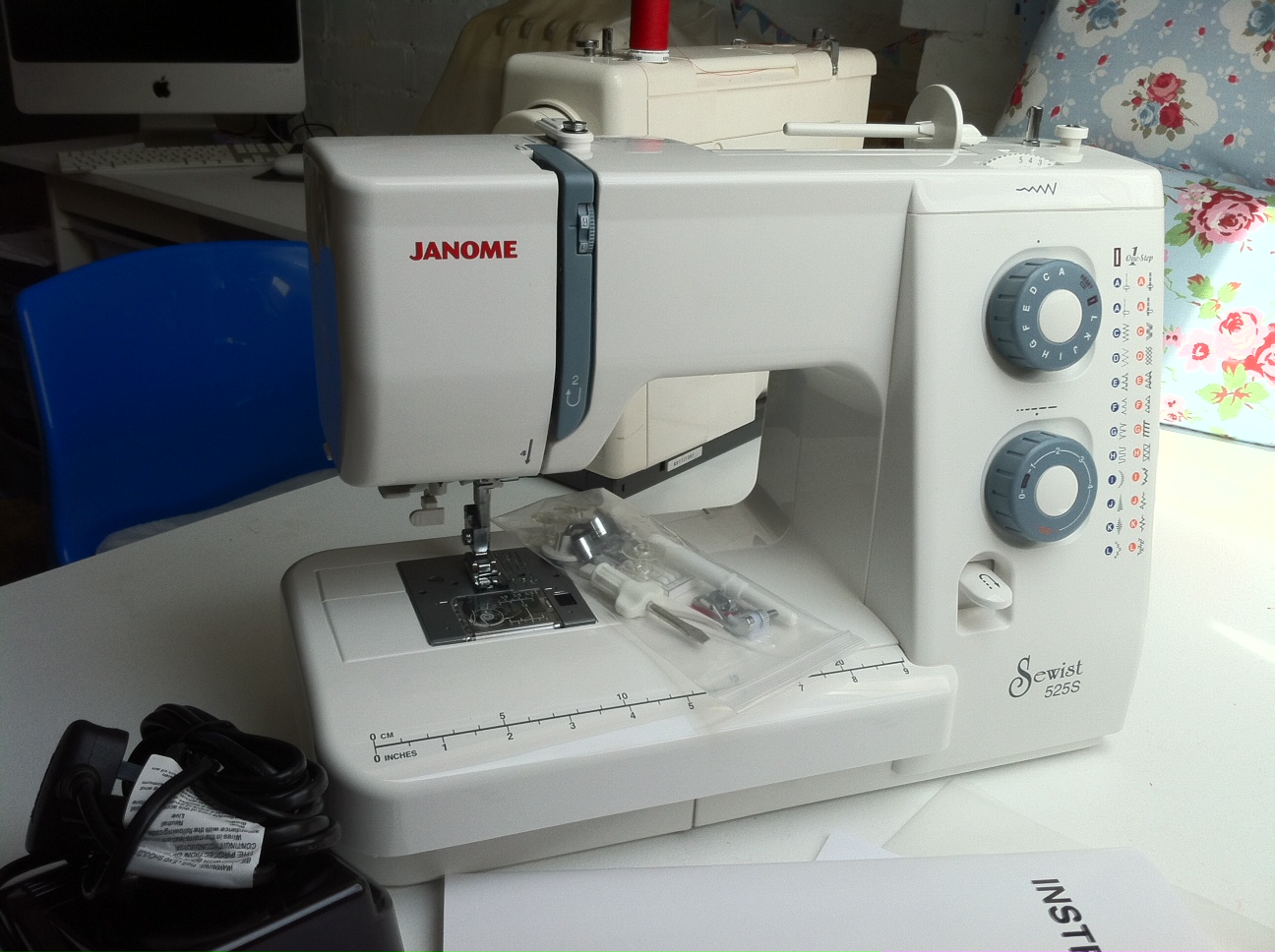
I had an exciting delivery earlier this week – a new sewing machine!  It arrived on Tuesday but I only had chance to open the box today and still haven’t tried it out.  My first sewing machine wore out after fifteen years of hard labour and I’ve had my second one for fifteen too, although there’s nothing wrong with it – I just fancied treating myself to an upgrade.  

I didn’t want a computerized one with all the bells and whistles or hundreds of embroidery stitches that I know I’ll never use, so ended up choosing the Janome 525s which seemed perfect for the way I work. I have since found out that it is the very same machine as used by The Great British Sewing Bee and the Kirstie Allsopp programmes, so hopefully I made a good choice.

Apologies for the rubbish photos all through this post, but hubby took my little camera to work so I used the iPhone and they weren’t worth putting through Photoshop so…..photo-28Talking of Kirstie, I watched one of her recent “Fill Your House For Free” programmes where she upcycled an old suitcase to make a dog bed. Now I know it’s nothing new, but I had acquired an old leather suitcase with this very project in mind as the puppy had all but destroyed her bed. So, instead of trying out my new toy, I made something that didn’t involve any sewing whatsoever.

Which makes this a great project for those of you who can’t/don’t like sewing.

Here goes….

Tutorial: How To Make A Dog Bed From An Old Suitcase

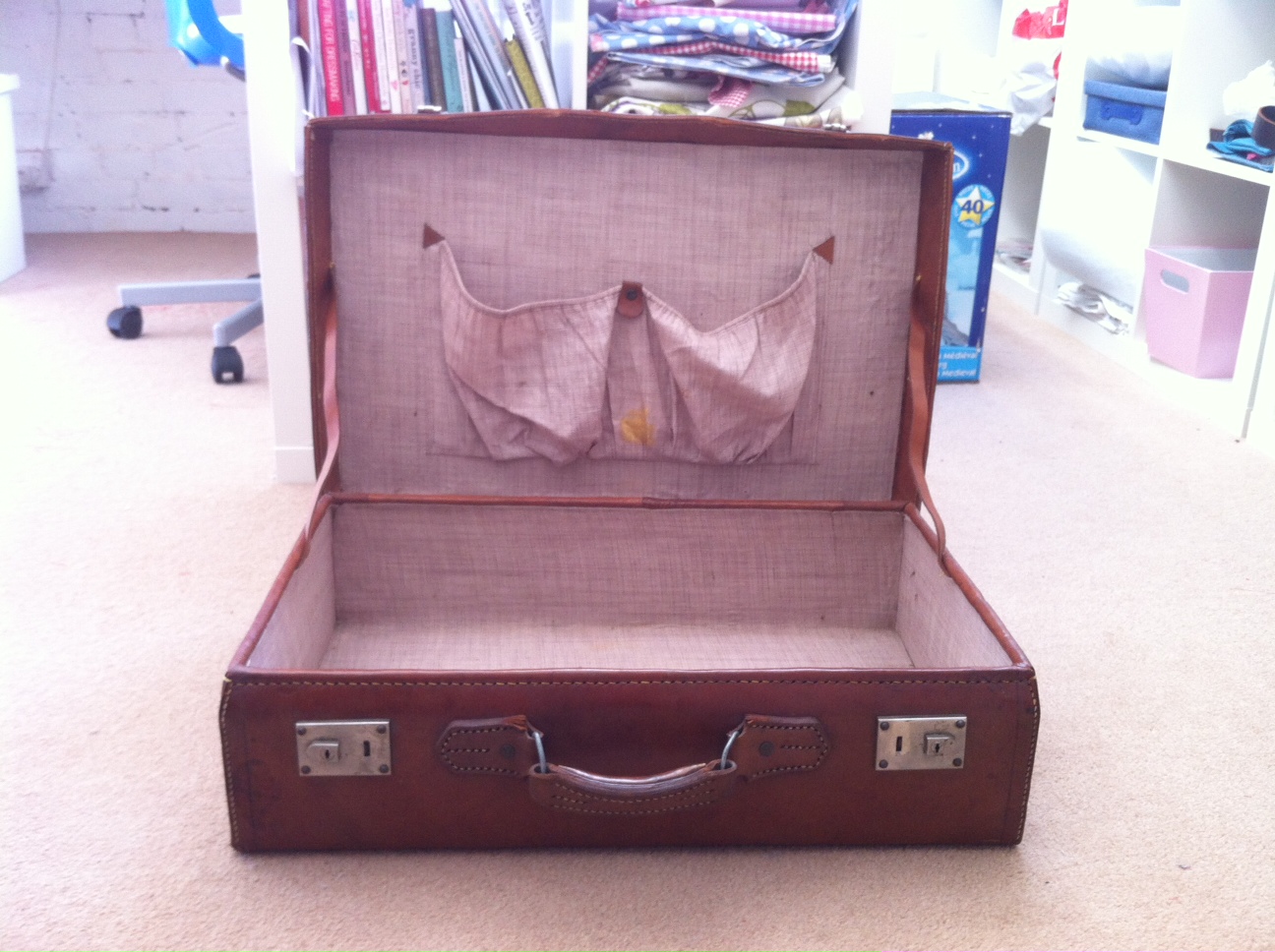
Acquire a strong, suitably sized suitcase – I managed to find a brilliant leather one on eBay.photo 1

photo 2Now you can leave the lid on, but you will have to fix it in the upright position permanently so as not to give your dog a nasty headache.

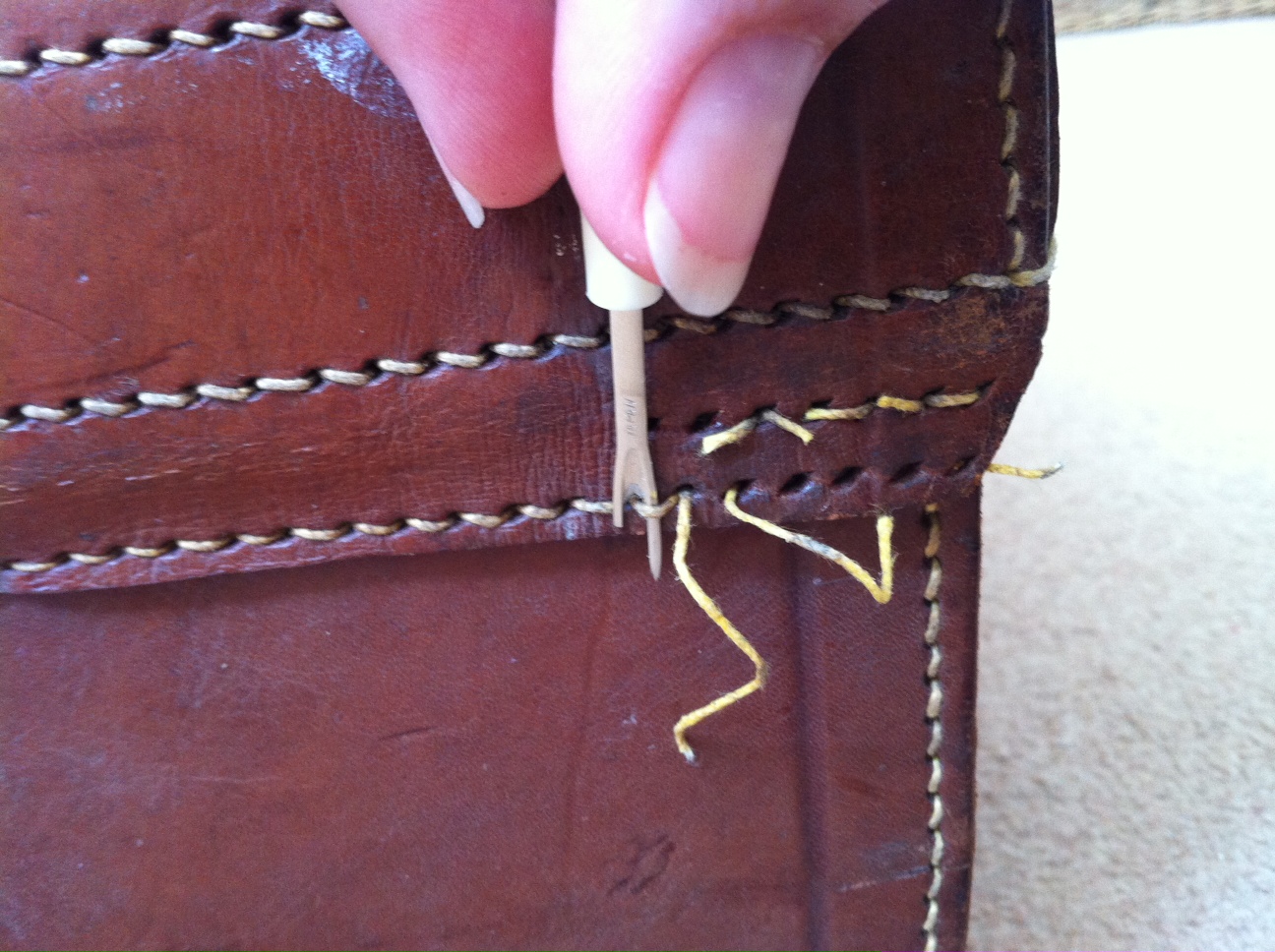
I decided not to take this risk, and removed it by cutting through the leather straps and unpicking the stitching that held it together.photo 2

photo 1At this point you could insert a piece of chipboard to the inside of the base for added strength depending on the size of your dog but, as mine is for two tiny Yorkies, it wasn’t necessary.

I had every intention of attaching beautiful bun feet to the base and waxing them a gorgeous shade of tan to compliment the vintage patina of the leather. But at twenty quid for four including postage, I thought that rather defeated the object.

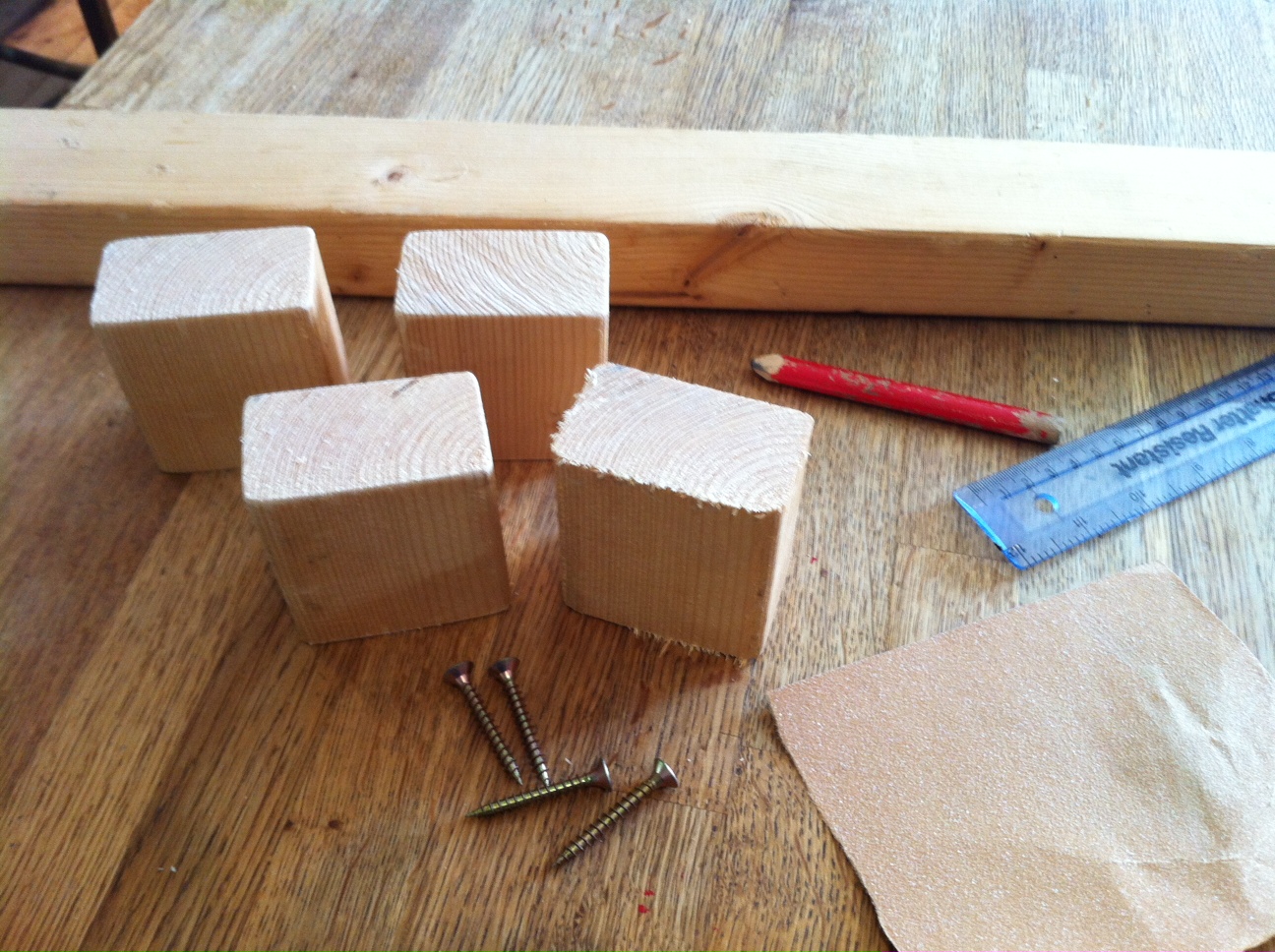
A quick visit to the woodpile turned up a perfectly adequate length of 2 x 3 which, with a little imagination, would do just fine.

I marked the timber at 7cm intervals (just under 3 inches in old money) and sawed four square-ish stumps for the feet. (What can I say? Hubby was at work and I was far too impatient to wait for him to come home and do it properly!)photo 4

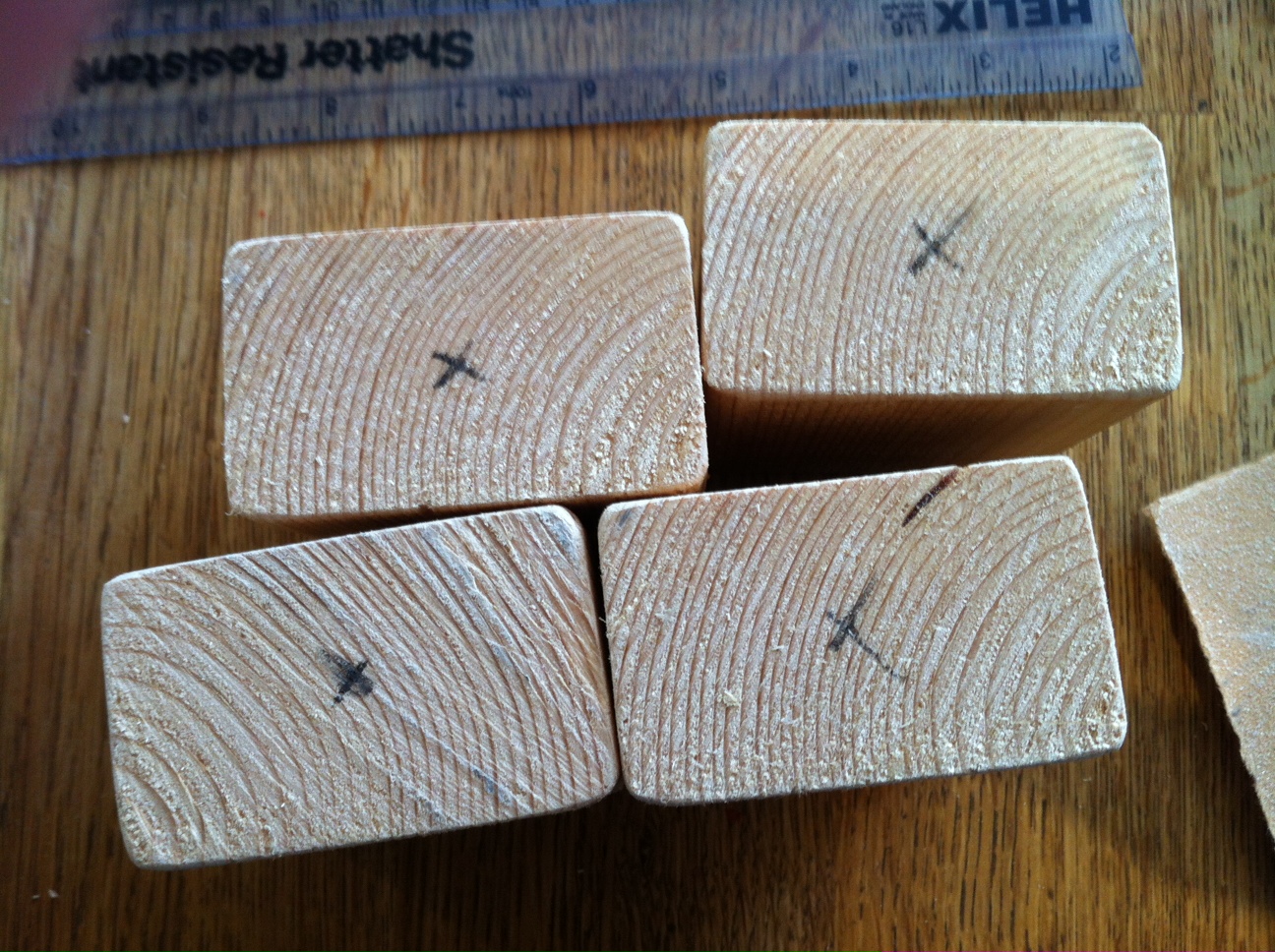
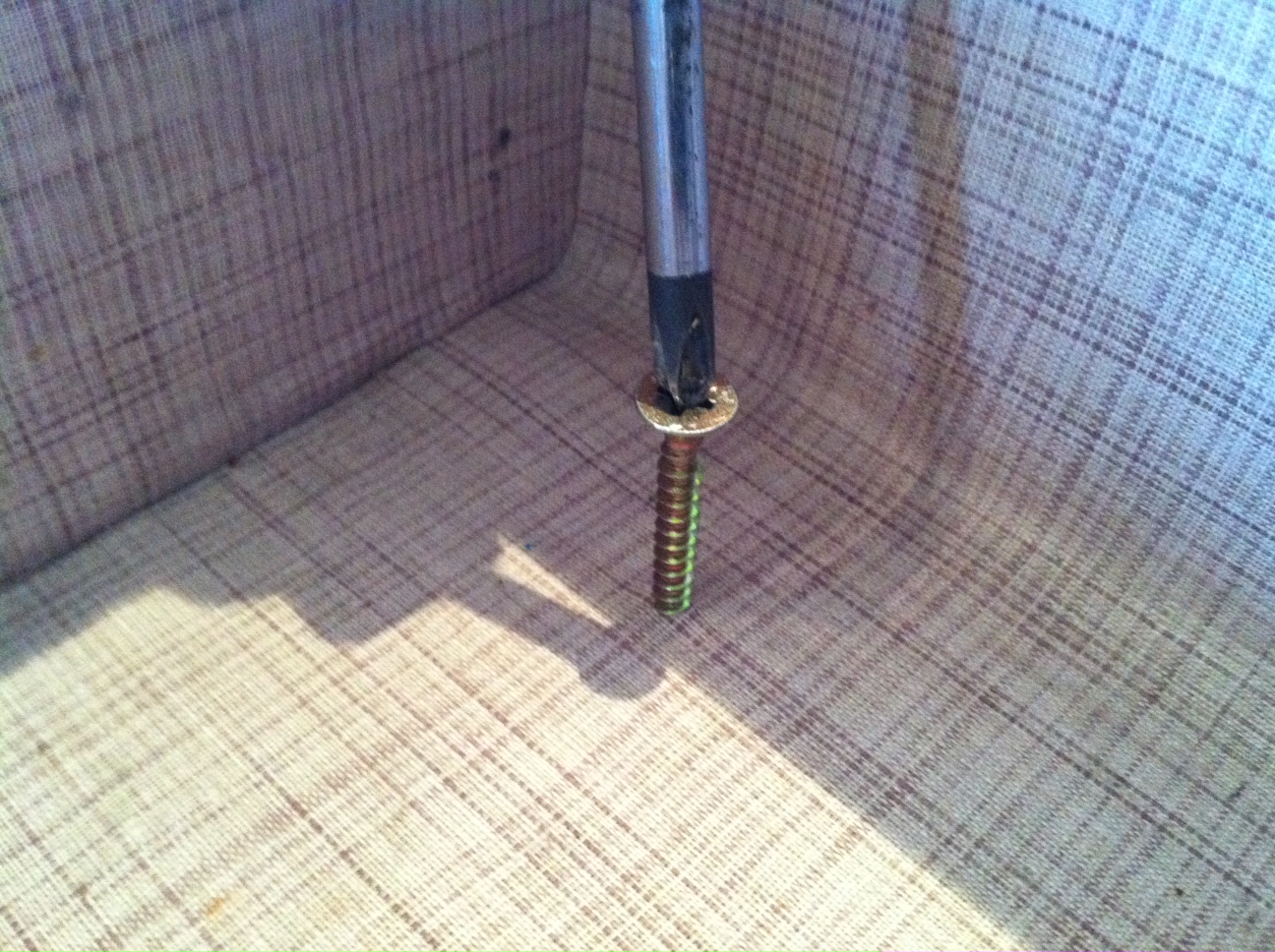
photo 3Sand the rough edges away to get rid of any splinters and also to provide a smooth surface for the paint.photo 3Mark the centre of each block of wood with a pencil and, if you don’t have self-driving screws, make a pilot hole with a drill or bradawl.photo 1Mark where you want your feet to go on the outside of the base and turn your screw until it pierces the leather.photo 4Remove and screw from the inside, through the hole you have just made and into the centre mark of the foot.

I found this to be the simplest method of transferring the markings and getting the holes in the right place!

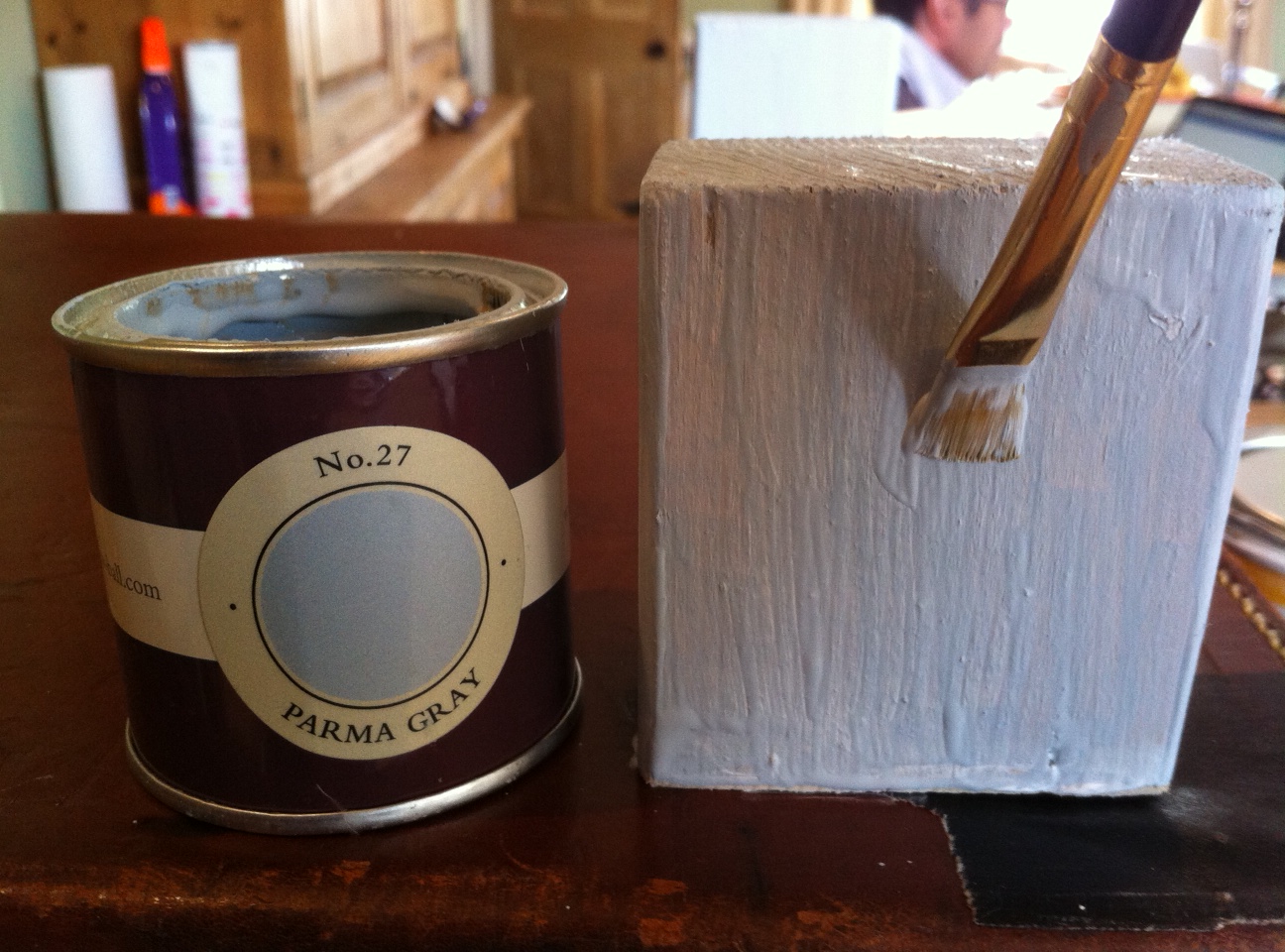
My husband would probably have done it differently but as I said, I’m impatient…photo 2If your wood is untreated as mine was, paint one coat of a suitable primer to seal.

I had some tester pots lurking in my understairs cupboard (as you do) which I knew would come in handy one day, and picked Parma Grey as a lovely modern contrast to the old leather. Two coats of paint seemed to be plenty.photo 3When dry, turn up the right way.

I had a feather pillow surplus to requirements which fits perfectly, but you could have a piece of foam cut to size if you prefer.

Whatever you choose to use as padding needs to be be waterproof really, so I used a waterproof pillowcase to protect it.

The existing dog blanket was wrapped around for comfort and….

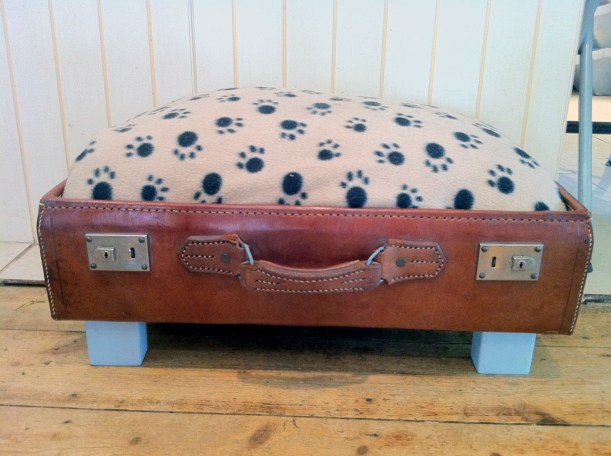
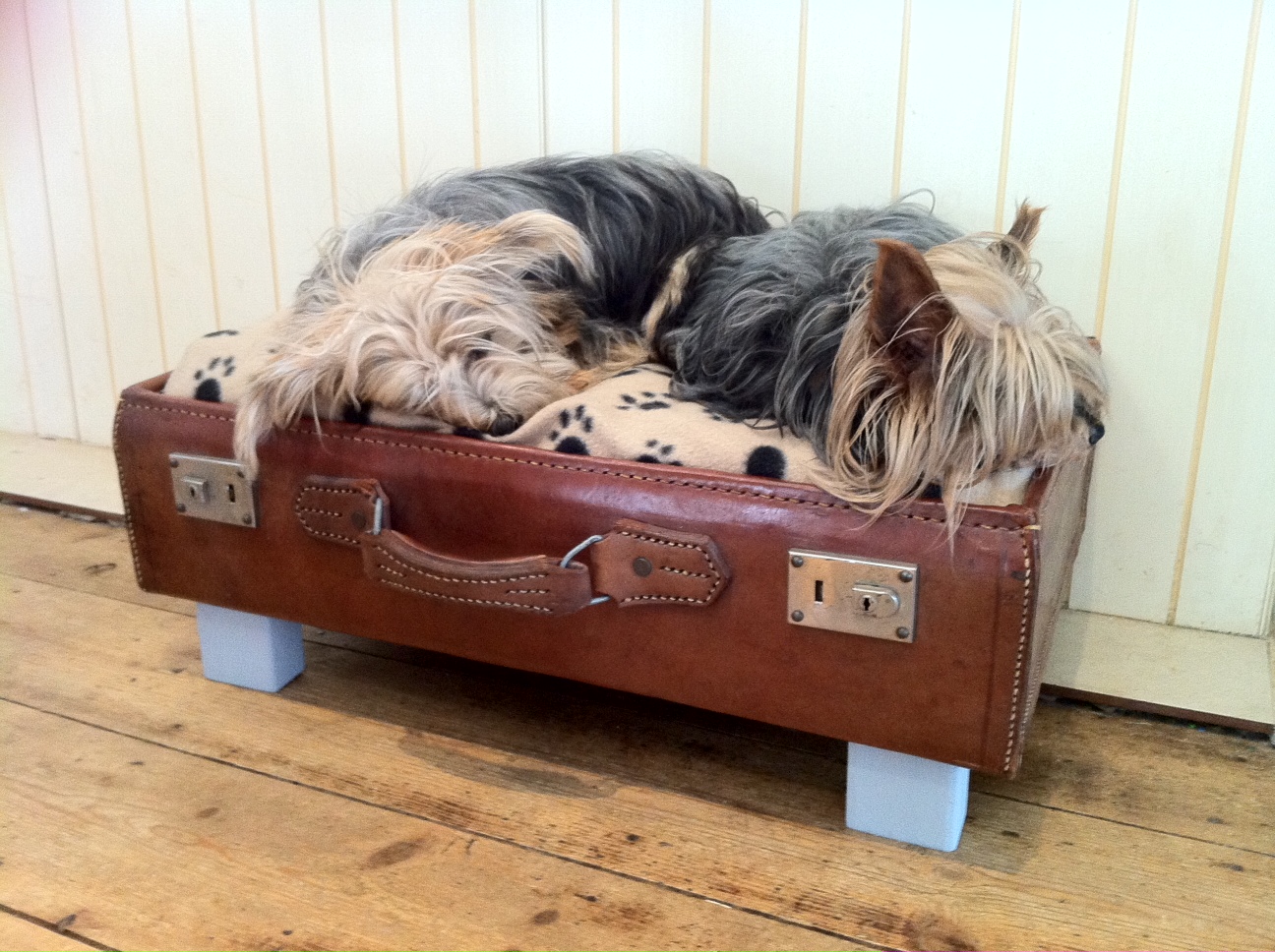
“Ta dah!”photo 4Both dogs hopped in immediately and settled down to sleep so I guess it’s a hit!photo 3By using stuff I had lying around the house already, I didn’t spend any money at all on the project so it was true upcycling.

The initial cost of the suitcase was twenty pounds and, although there are cheaper ones to be found, I wanted a sturdy leather one with strong stitching and a good base. I think twenty pounds for a unique, (luxury?) dog basket is a bargain quite frankly, and I’m really pleased with it! 

What do you think? Have you been inspired by anything you’ve seen on TV?


6 Comments

Tutorial: How to make your own Bias Binding

Ok, so buying it ready-made is easy and convenient but it’s not cheap and what if you can’t get the right colour to finish your project?

That was my dilemma this week, so I made my own bias binding to coordinate perfectly and I thought I’d show you how.

First off, you need to find the bias of your chosen fabric which is really easy.  If you pull along the grain (parallel to the edge), the fabric won’t stretch (unless it’s a knit fabric) and if you pull it at 45° to the grain it will stretch as demonstrated below: –

Image

Using tailor’s chalk, mark lines on your fabric on the bias at 1 1/2″ intervals (or the width suggested by your bias maker).

Image

Cut along the lines

Image

Image

With right sides together, pin two strips at right angles to each other as shown: –

Image

If you’ve gone to the edge of the fabric your corners will already be cut off, if not, you can do this now, then sew together.

Image

Press the seam open.

Image

Repeat, joining as many strips as you need to make the required length.

With wrong side facing up, insert the corner of the leading edge into the bias maker. Using the metal bar, pull very gently along the length of the fabric, ironing as you go.

Image

When you have completed the entire strip, fold in half right sides together and press.

Image

If you don’t have a bias maker, get one – they’re indispensable.  However, you can also make bias binding without a tool, it’s just a bit more fiddly. Here’s how: –

1. Cut your strips as before

2. Fold in half, wrong sides together, press along fold.

3. Open out and bring in outside edge to meet the fold. Press.

4. Repeat with other edge.

Done!  Now you have bespoke bias binding to coordinate with your project!

Image

I know, you’re dying to know just exactly what my project is, aren’t you?

Well you’ll have to wait until after the weekend because it is a present for someone very special and I don’t want to spoil the surprise, but here’s a sneak preview for now…

Image

Lots of photos to come so follow the blog to see them.

In the meantime, why don’t you have a go at making your own bias binding and show me what you’ve made with yours?


4 Comments

Presentation Box With Bunting

If you saw yesterday’s post about the handmade fudge I created for the school fair, you may remember that I was just going to take it along in a bread basket.

Well, I thought that, since I had gone to the trouble of making the fudge and packaging it nicely, I could be a bit more creative with the presentation. 

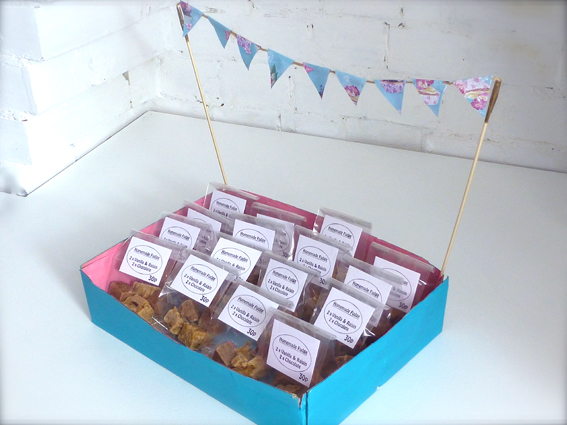
An hour later I had made this: –

Image

Inspired by this tiny scrap of leftover “Afternoon Tea” wrapping paper which was just too pretty to throw away…

Image

…I decided the colour scheme could be pink and blue with paper bunting.

Here’s what I did….

  1. Paint the outside of a shallow cardboard box (I used the lid off a box of photocopier paper) in blue and the inside in pink.  I used acrylic paints which dried super-quickly.
  2. Using parcel tape, stick two wooden skewers at an angle to the inside-rear of the box.  Paint pink.


Image

3.  Using PVA adhesive, glue down a piece of wrapping paper to the inside base of the box.  (I didn’t have enough to cover the entire       base, so I painted a strip down each side in pink beforehand).

Image

4.  Attach a length of string between the top of the skewers using parcel tape.

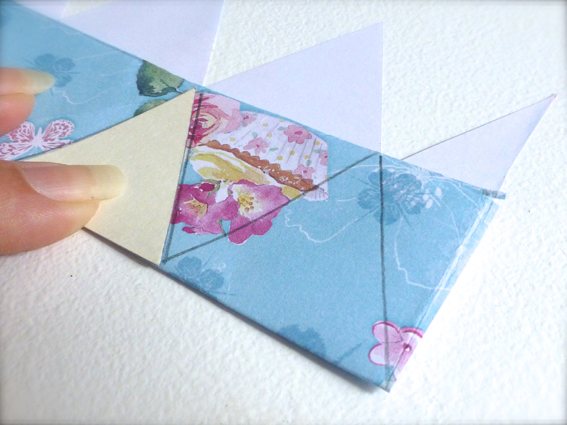
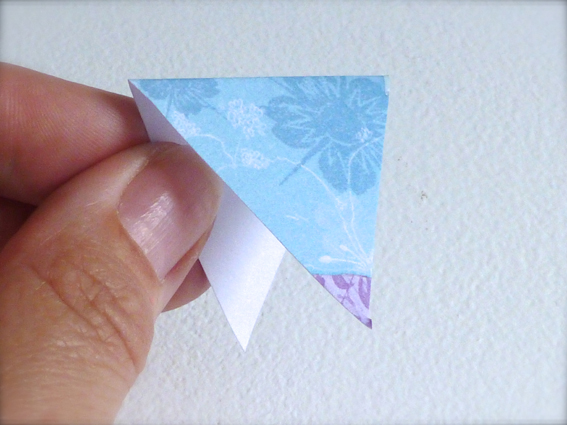
5.  Draw a small triangle onto a piece of card and cut out to make a template for the bunting.  Fold your wrapping paper and place the template short edge along the fold.  Draw around, and cut out.

Image

Image

6.  Paste a small amount of glue onto the inside of your bunting pennant, hang over the string and press together.

Image

Image

And there you have it – a suitably themed box in which to present your homemade goodies for sale.  They look much cuter in this rather than the bread basket, don’t they?

Image

A presentation box complete with “Afternoon Tea” wrapping-paper bunting – perfect for selling sweets, chocolates or small gifts on your stall at your school fair or Summer fête.


2 Comments

Homemade Fudge

It’s that time of year again – School Fair!  This begs the question: “What-to-make-that-kids-will-want-to-buy?”. It has to be cheap for two reasons;

  1. It’s a donation – you don’t get costs refunded
  2. Children have about two pounds to stretch around the entire fair


I decided to do something different to the usual fairy cakes and hit upon the idea of fudge in two flavours – “Chocolate” and “Vanilla & Raisin”.

Fudge is sweet (so kids will love it) and simple to make, the ingredients are cheap and I thought I could package it up to look appealing.

This is the Chocolate…

Image

and this is the Vanilla.

Image

Mmmmm, delicious!

Image

Here’s what I did:

Ingredients: –

397g can condensed milk

150ml single cream

450g demerara sugar

115g butter

  1. Melt all the ingredients in a large, non-stick pan over a low heat, stirring until the sugar dissolves.
  2. Bring to the boil then simmer for 10-15 minutes, stirring continuously and scraping the base of the pan.
  3. Continue until a sugar thermometer reads 118°C – this is vital, or the fudge won’t set.
  4. Transfer to a mixer and beat until very thick and only just beginning to set.
  5. Pour into a 20cm square tin, lined with baking parchment, and leave to set before cutting into squares.


For chocolate, add two tablespoons of cocoa powder at step 4.

For vanilla (and raisins) add one teaspoon of vanilla extract (and two tablespoons of chopped raisins) at step 4.

Image

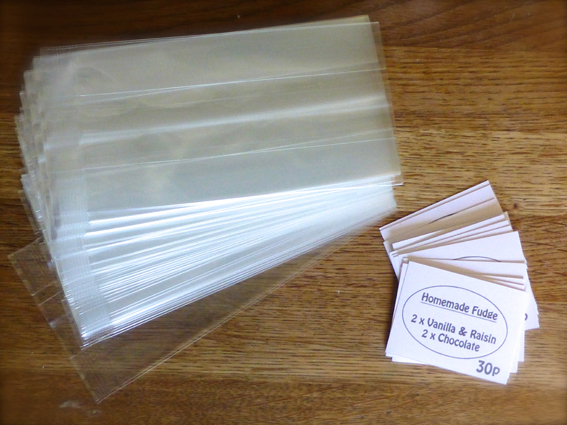
I found some small cellophane bags here www.wrappingsandbows.co.uk

Image

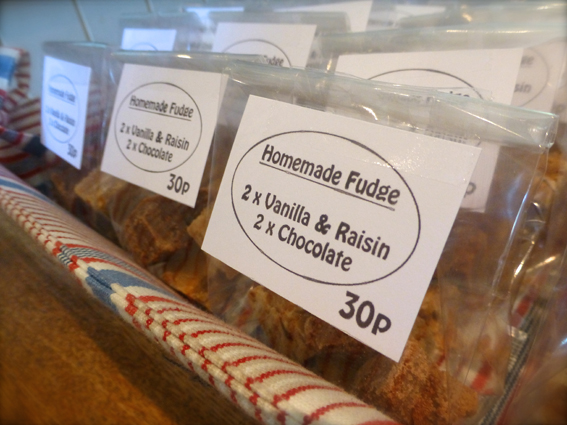
I designed some simple labels to attach to each bag with the price clearly stated.

Image

Pricing is tricky but, as this was my donation, I just added up the cost of the ingredients and packaging and divided it roughly between the number of bags created. I put two squares of each flavour in each bag and made twenty-eight bags, plus plenty of offcuts which could be bagged up and sold off cheaper (if you haven’t already succumbed to temptation and eaten them as you go along!).

Image

I think they look quite saleable, don’t you?

Here they are all lined up in bread baskets, ready to go.

Image

Image

Image

So there you have it – handmade fudge, simple but perfect idea for school or village fairs!


Leave a comment

How To Make Elderflower Cordial

To my mind, Spring has finally sprung when the first tender flowers appear on our Elderberry bush and I can look forward to the first batch of Elderflower Cordial fresh from the garden.

Image

The girls and Cock love to shelter from the sun under the seasonal shade the bush provides in our otherwise tree-less garden. (Oh, how I yearn for an orchard…)

Image

The delicate, creamy-white flowers make the most divine Elderflower Cordial and, as the flowers very quickly make way for berries, there is a short window of opportunity in which to harvest them.

Image

The flowers form distinctly separate heads which should be picked in the morning on a dry, sunny day when their aroma will be at its best. Pick a time when you will be able to make the cordial immediately as the flowers are best used within two hours of picking.

Image

My Elderflower Cordial Recipe


You will need: –

15-20 Elderflower heads

1 litre boiling water

1kg granulated sugar

2 large lemons (zest AND juice)

Some recipes call for citric acid as well, but I find using the zest and juice of the lemons works just as well.


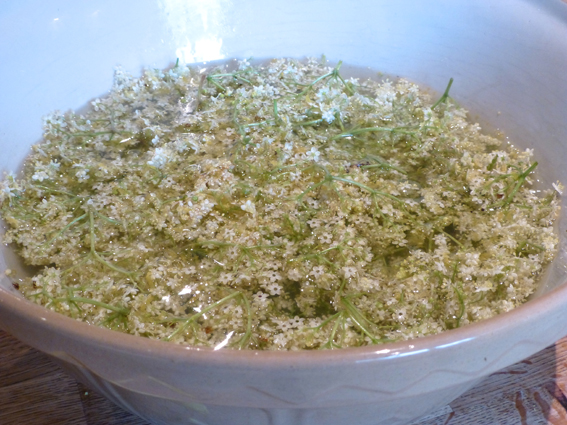
Shake the flowers to remove any insects and cut off the stalks. Put the flowers in a large bowl.

Image

Add the sugar to the boiling water in a jug and stir until dissolved, then add the lemon zest and juice.

Image

Pour the syrup over the elderflowers, cover and leave for 3 days, giving it a good stir each morning and night.

Image

Strain the mixture through a piece of muslin, squeezing well to capture every lovely drop!

Image

Decant into sterilized bottles. (To sterilize, wash two one-litre bottles and leave to dry.  Pre-heat an oven to 150′ celsius, lay your bottles on the oven shelf and leave for 15 minutes.  Remove from the oven and allow to cool slightly before filling.)

Image

Voilà!  Delicious, homemade, Elderflower Cordial ready to enjoy!  It will keep up to a year in the fridge, although you’ll be doing well if it lasts until the end of the summer holidays if your kids are anything like mine:)

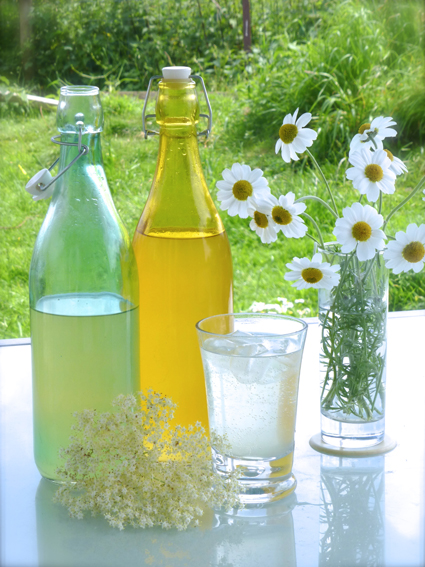
It also makes a lovely gift if presented in swing-top bottles like these with a hand crafted label and gift tag.

Image

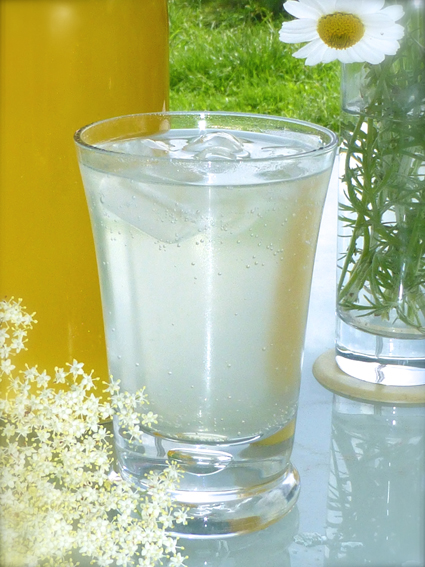
I like it best served with sparkling mineral water (dilute about 1 part cordial to 6 parts water) but it is just as nice made with lemonade apparently – and plenty of ice.

Image

Endorsed by children everywhere (well, six year old Freddy loves it anyway)…

Image

There you have it, your very own, not to mention quick and easy, Elderflower Cordial – luvvly jubbly.


2 Comments

Tea Cosy Tutorial

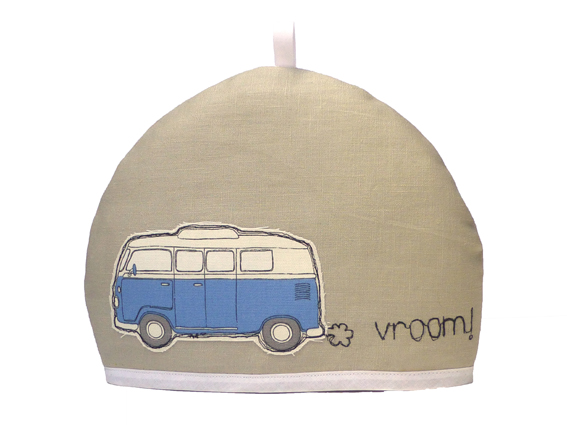
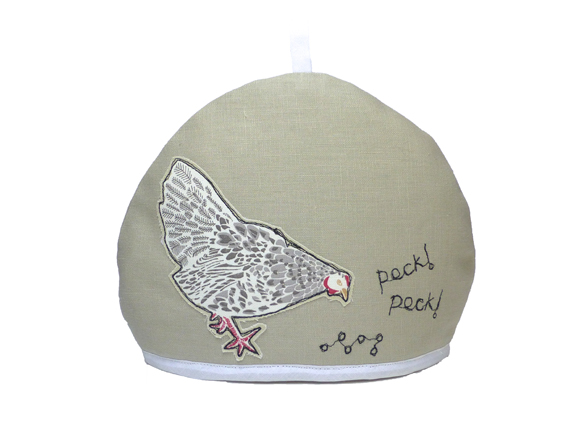
There has been quite a lot of interest in my ‘Camper Van’ and ‘Hen’ tea cosies, so here is the tutorial I promised.  I would love to see any that you make – post your photos on my Facebook page:)

Image

You will need: –

  • a sheet of A4 paper
  • 1/4 metre of fabric of your choice
  • 1/4 metre lining fabric
  • 1/4 metre polyester wadding
  • motif (for appliqué)
  • iron-on interfacing
  • matching thread
  • cotton tape
  • bias binding

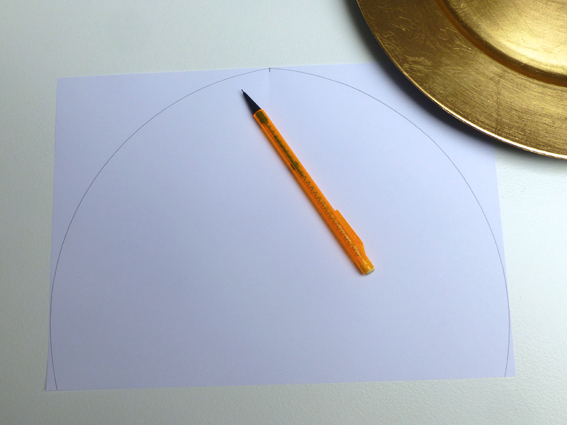
On an A4 sheet of paper, use a large plate to draw the rounded corners of the tea cosy.

Image

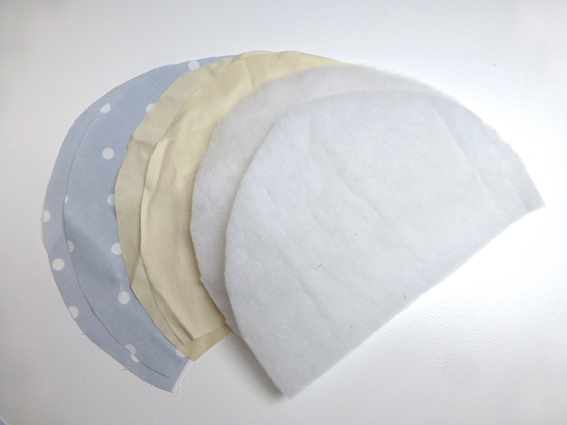
Using the paper template you have just made, cut TWO each out of your main fabric, lining and some polyester wadding.

Image

Take your chosen motif (I cut out a Camper Van from the Fryett’s range) and iron onto fusible interfacing.

Image 

Cut roughly around the motif and pin onto one of your main pieces of fabric. Stitch all around the motif three times. You can be as neat as you like, although I “scribble-stitched” using the freehand machine embroidery method.  This allows the fabric to fray very slightly and adds to the rustic charm.  You could use a close zigzag stitch if you prefer, to enclose the raw edges for a neat finish.

Image

Trim the excess fabric from the finished appliqué.

Image

Cut a 4″ (10cm) piece of non-stretch cotton tape.

Image

Fold the tape in half and pin to the right side of one of your main fabric pieces as shown to form a small handle.

Image

Pin your fabric, right sides together, sandwiching the cotton tape in between.  Pin your lining, right sides together.  Stitch all the way around the curved edge, leaving the bottom, straight edge, free.

Image

Turn and press.

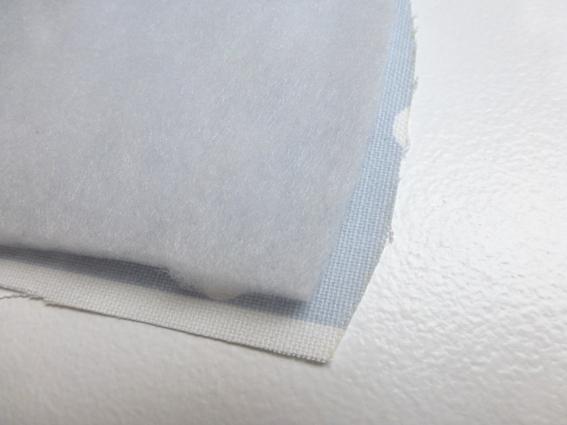
Trim the wadding by 1/2″ (1cm) all the way around.

Image

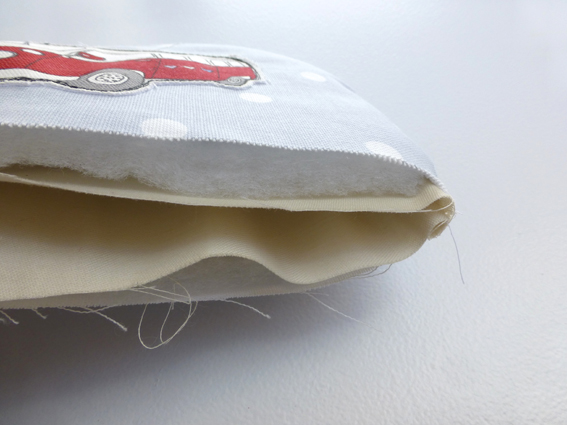
Slip the lining inside the cosy, wrong sides together to hide the seams.  Now insert the wadding in between the fabric and the lining (front and back) as below.

Image

Pin the bias binding around the bottom of the cosy, enclosing all three layers.

Image

When you get to the end, cut to length and fold under before pinning over the cut end.

Image

Sew close to the edge of the binding.

Image

And there you are – finished!

Image

You can customise it to suit your style using any motif.  Here’s a variation with more free machine embroidery.

Image


This is one I made out of beige linen with a hen appliqué.

Image

Feel free to share on your own blog; a link back to this page would be appreciated:)


Leave a comment

Crochet Edge Cushion Tutorial

If you like the crochet edge cushions and would like to have a go at making one for yourself, I’ve put together a tutorial to help you.

If anything is not clear, please let me know and I’ll amend it.

So, here goes!

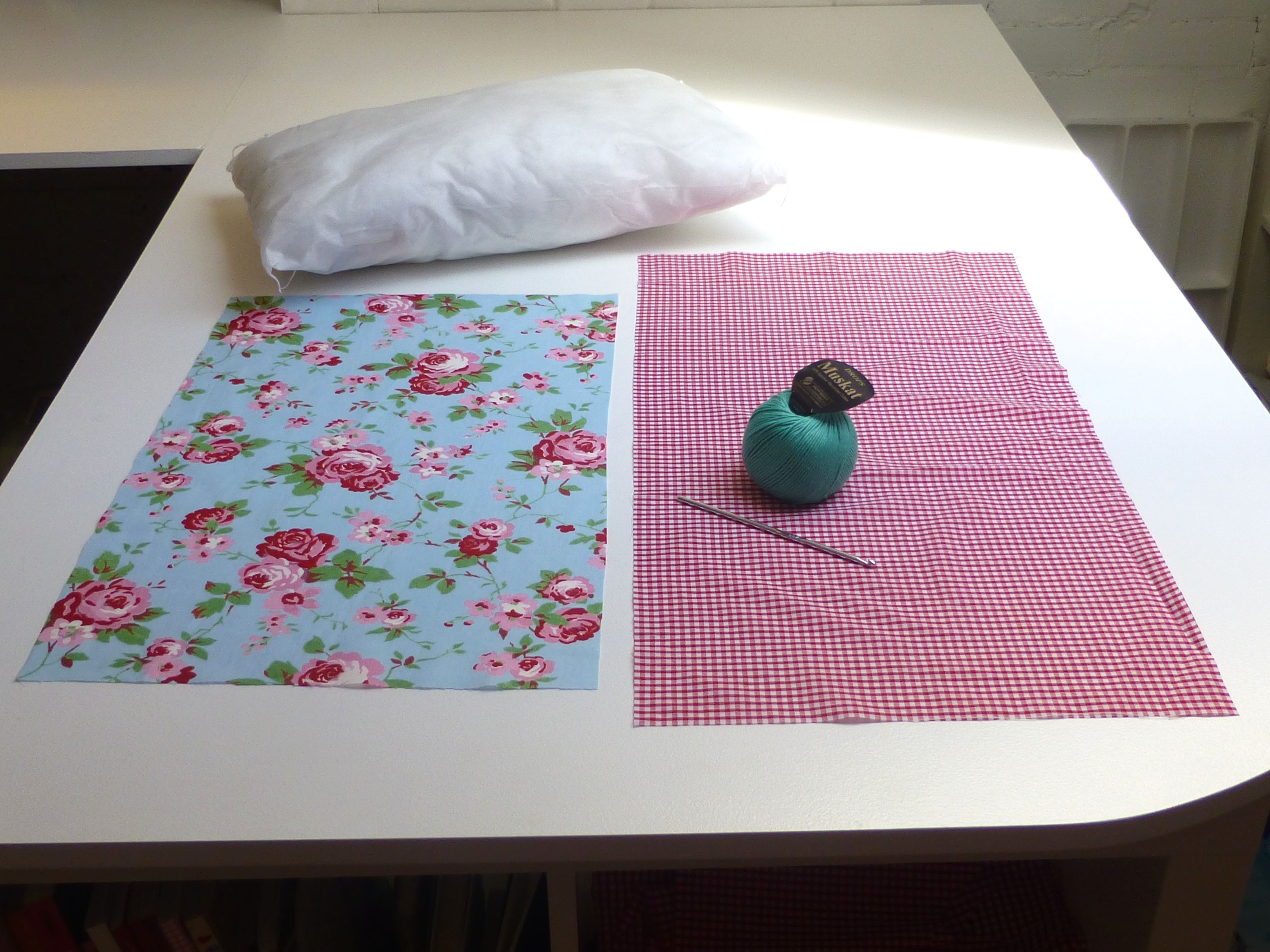
You will need: –

  • A 30 x 50cm cushion pad
  • A piece of fabric 34 x 53cm for the cushion front
  • A piece of fabric 34 x 65cm for the cushion back
  • Yarn for the crochet edge (I used Drops Muskat Cotton and a 4mm hook)

Image

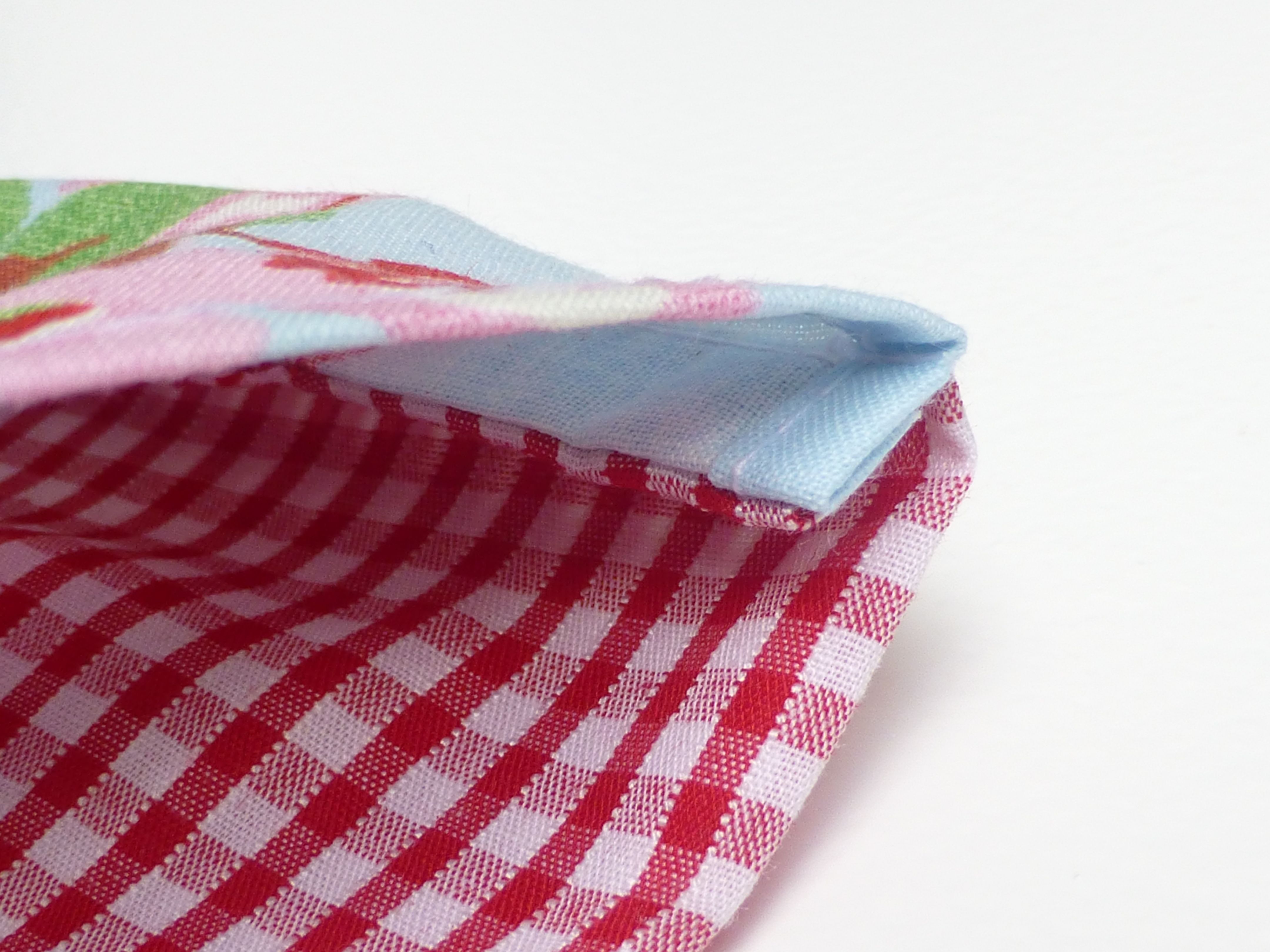
1.Make a narrow hem on one short edge of each of your pieces of fabric – this will be the opening edge.

Image

2.Take your back piece and, wrong sides together, fold the hemmed edge in 12cm. Press and pin.

3.Pin front to back, wrong sides together and stitch around the three raw edges with a 5mm seam.

Image

4.Trim seam to 3mm. Turn inside out and press.

5.Stitch a 10mm seam around the same three sides, this time enclosing the raw edges.

Image

This creates a “French” seam which stops any fraying (and is really neat!)

Image

Your cushion cover is made and now for the exciting part…

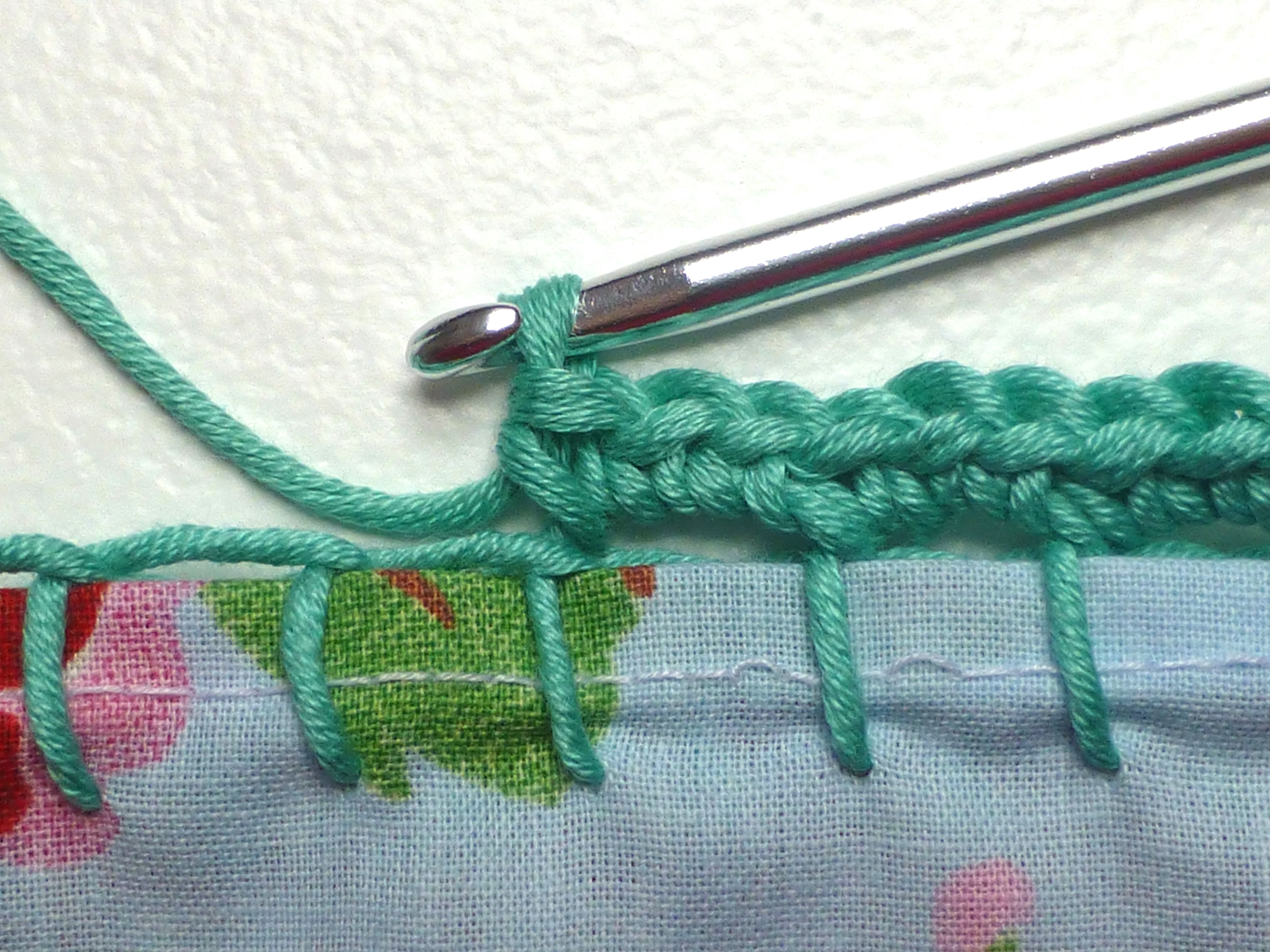
6.Cut a length of yarn about eight times the width of your cushion cover and blanket stitch all around the opening edge.

Image

7.Row 1 – 3 dc into each blanket stitch (English terms are used)

Image

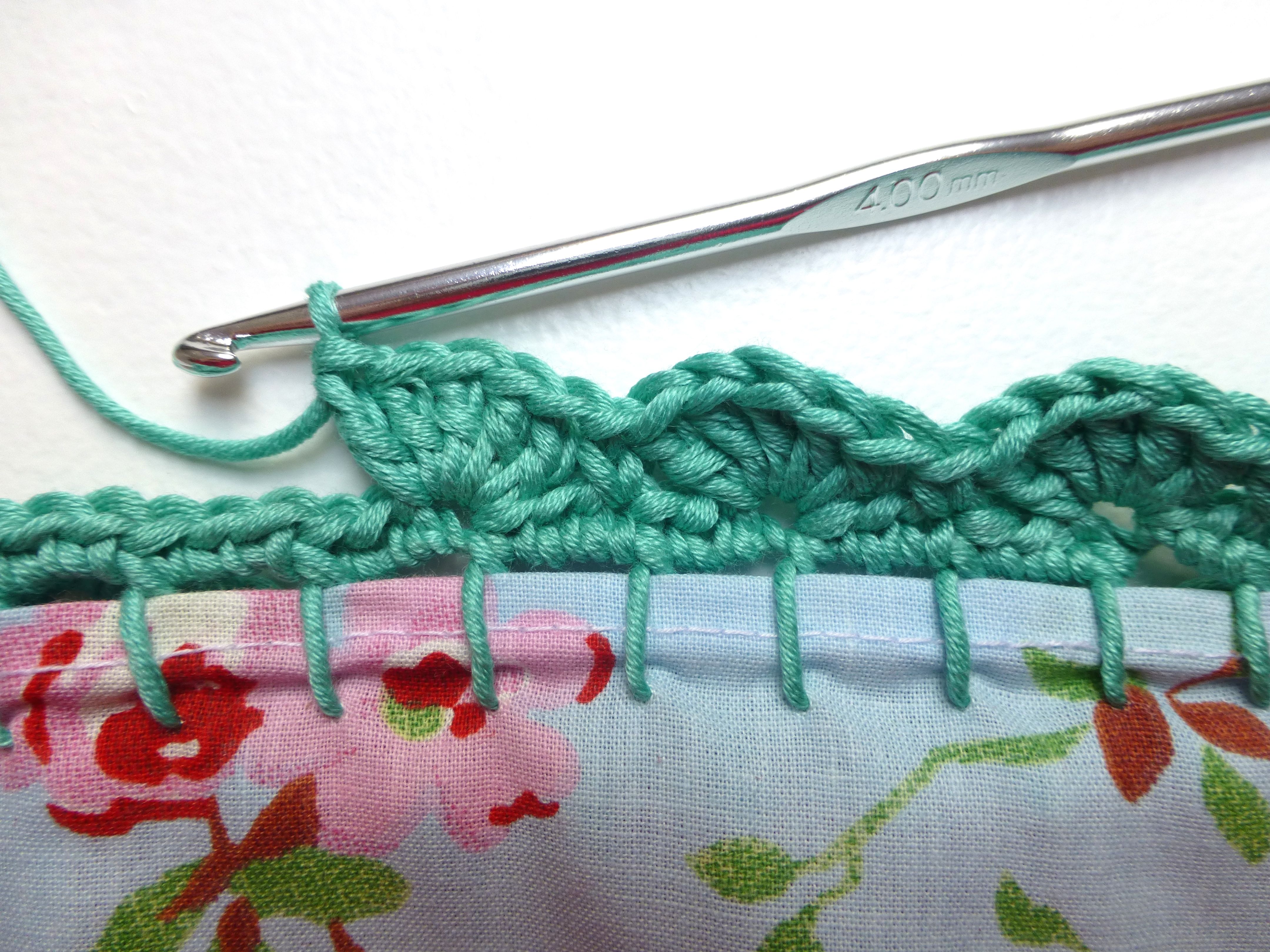
Row 2 – ch 1, *dc into 1st foundation stitch, skip 2, 5 tr into next foundation stitch, skip 2* Repeat to end, filling any remaining stitches    with dc.

Image

8.Close with a slip stitch and pull yarn through to finish.

Voila! A gorgeous cushion cover with the prettiest crochet edging.

Image

I would love to see your versions – post photos to my Facebook page (link on top right of this post).

If you would like to use this on your blog, please link back to this page.

Have fun:)